Total: 0Toman
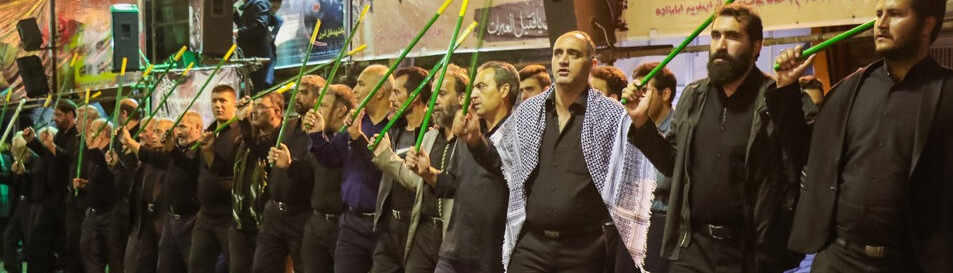
Maragheh's Ashura rituals, the most important manifestation of the city's culture and history.
Maragheh's Ashura rituals, the most important manifestation of the city's culture and history.
Muharram Mourning Ceremonies in Maragheh
The mourning ceremonies of Muharram are among the richest and most expressive manifestations of Iran’s religious and national culture. Across the country, diverse rituals have developed in accordance with the history, beliefs, and cultural identity of each region—many of which are unique and not practiced elsewhere. In the city of Maragheh, located in East Azerbaijan Province, such distinctive ceremonies are clearly observable. These rituals possess deep historical roots and reflect the profound devotion of the local population to Imam Hossein (AS). A number of these ceremonies have been officially registered as national intangible cultural heritage, as part of ongoing efforts to promote and preserve these valuable traditions.
Maragheh: An Important City of the Province
Maragheh is the second-largest city in East Azerbaijan Province and is situated approximately 135 kilometers south of Tabriz, the provincial capital. The city has held an important position in the region since ancient times; however, its most significant period of prosperity dates back to the Ilkhanid era (13th–14th centuries CE), when Maragheh served as the capital of the dynasty. Many of the city’s major historical monuments were constructed during this period. Among them, the Maragheh Observatory is perhaps the most renowned—a site that functioned as a major scientific center of its time and hosted scholars from various regions and nationalities.
Today, Maragheh has a population of over 175,000, the majority of whom are Shiite Muslims. Consequently, the observance of Muharram mourning rituals is deeply embedded in the city’s historical and cultural fabric and can be regarded as one of its most significant cultural treasures.
The Beginning of Muharram Mourning Ceremonies
The importance of Muharram has led to the commencement of preparatory rituals several days before the beginning of the month. Typically, following the celebrations of Eid al-Ghadir—which commemorates the appointment of Ali ibn Abi Talib (AS) as the successor to the Prophet of Islam—residents begin welcoming Muharram by preparing hosseiniyehs and tekyehs, and by draping streets and public spaces in black.
During the first ten days of Muharram, numerous traditional rituals are performed throughout the city. Among the most prominent of these ceremonies are Shah Hossein Goyan, Alam-Bandan (the binding or raising of standards), Va Abbas, Hajleh-Gardani of Hazrat Qasem ibn al-Hasan (AS), candle processions, and Allah Allah Hosseina Veina.
The Shah Hossein Goyan Ritual
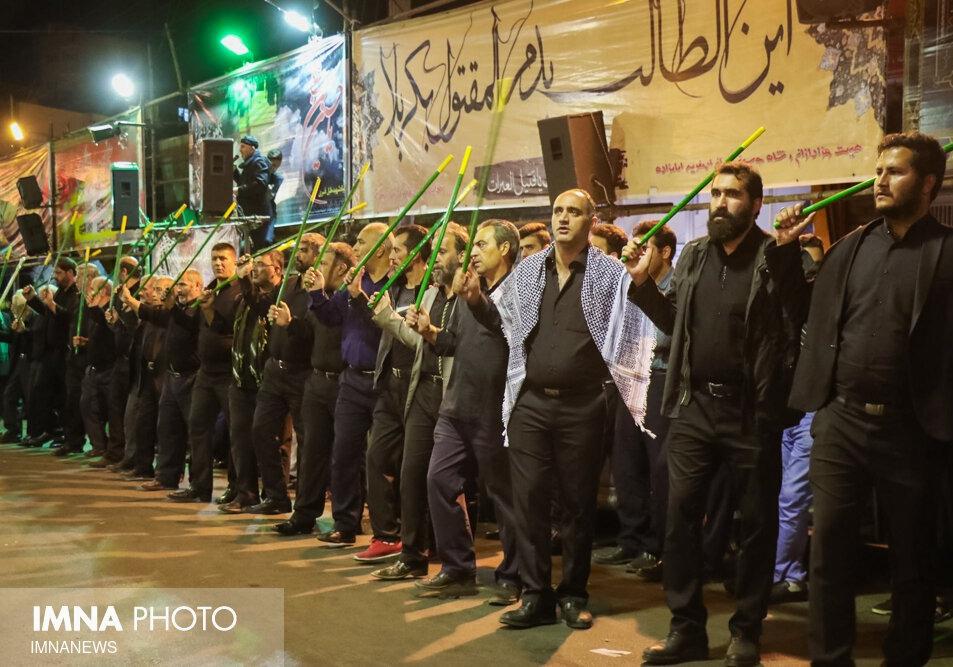
This ritual is observed not only in Maragheh but also in other Azerbaijani-speaking regions. During the ceremony, mourners chant the phrase “Shah Hossein, Vay Hossein,” which in the local dialect is pronounced as “Shakhsi Vakhsi,” as an expression of sorrow and devotion. This ritual was inscribed on Iran’s National List of Intangible Cultural Heritage in 2015 (1394 SH).
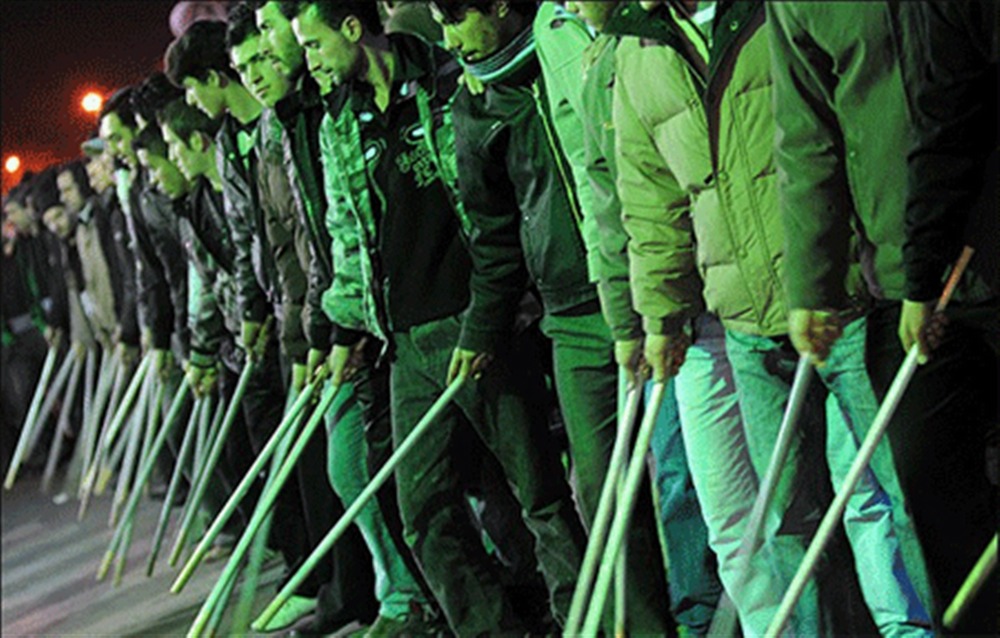
The processions of Shah Hossein Goyan begin several days prior to the start of Muharram and continue until the eve of Imam Hossein’s martyrdom. In Maragheh, these processions take place nightly in different neighborhoods. Mourners, holding wooden sticks, move rhythmically through the streets while collectively chanting “Shakhsi Vakhsi.”
The Alam-Bandan (Standard-Raising) Ritual
Another significant Muharram ritual in Maragheh is Alam-Bandan, which was registered on Iran’s National List of Intangible Cultural Heritage in 2011 (1390 SH). This ceremony is held annually on the third day of Muharram, commemorating the arrival of Imam Hossein’s caravan in Karbala.
During this ritual, each neighborhood of Maragheh—such as Chehel-Pa, Birun-Qal‘eh, and Shoja‘-od-Dowleh—raises a ceremonial alam adorned with black cloth. Among these, the Alam of Darvazeh Square, standing at over 12 meters in height, is the most prominent and widely recognized.
The Va Abbas Ritual
On the evening of the eighth day of Muharram, known as the night of Tasua, mourning ceremonies are particularly dedicated to Abbas ibn Ali (AS), the loyal brother and companion of Imam Hossein. On this night, the ritual known as Va Abbas is performed in Maragheh.
This ceremony is characterized by its intense emotional and devotional atmosphere. Small groups gather together and engage in chest-beating (sineh-zani) while repeatedly chanting “Va Abbas,” expressing grief, loyalty, and reverence for his sacrifice.
Lighting Candles in 41 Mosques
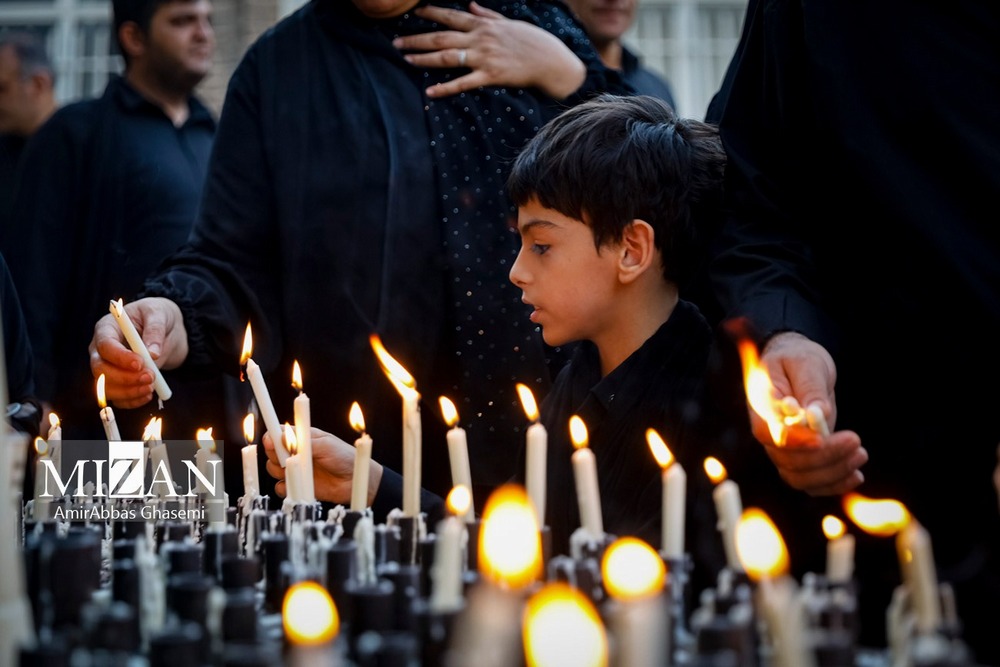
According to certain narrations, on the night of Ashura, Imam Hossein erected 41 additional tents as a strategic measure to give the enemy the impression that his forces were larger in number. Based on this belief, the people of Maragheh commemorate this night by lighting candles in 41 historic mosques throughout the city while reciting elegies and lamentations.
This ritual, known as Sham‘-Gardani (candle procession) or Sham‘ Paylamagh in the local dialect, was registered as a national intangible cultural heritage element in 2012 (1391 SH).
The “Allah Allah Hosseina Veina” Ritual
On the morning of Ashura, following the performance of the dawn prayer (Salat al-Fajr), the people of Maragheh form a mourning procession that begins at Hajj Ghaffar Hosseiniyeh, one of the city’s oldest religious congregational halls. The mourners wear towels symbolizing the garments of Ihram, walk barefoot, and smear their faces with mud and ashes as they proceed toward the city’s main square.
This distinctive form of mourning symbolically refers to Imam Hossein’s unfinished pilgrimage (Hajj). In the year 60 AH, Imam Hossein left his pilgrimage incomplete and set out toward Kufa in response to the invitation of its people—a decision that ultimately led to the tragic events of Karbala.
| Name | Maragheh's Ashura rituals, the most important manifestation of the city's culture and history. |
| Type | |
| Country | Iran |
| State | |
| City | |
| Start date | Apr 15 2024 |
| End date | Apr 15 2024 |
Tourist Attractions
Museums
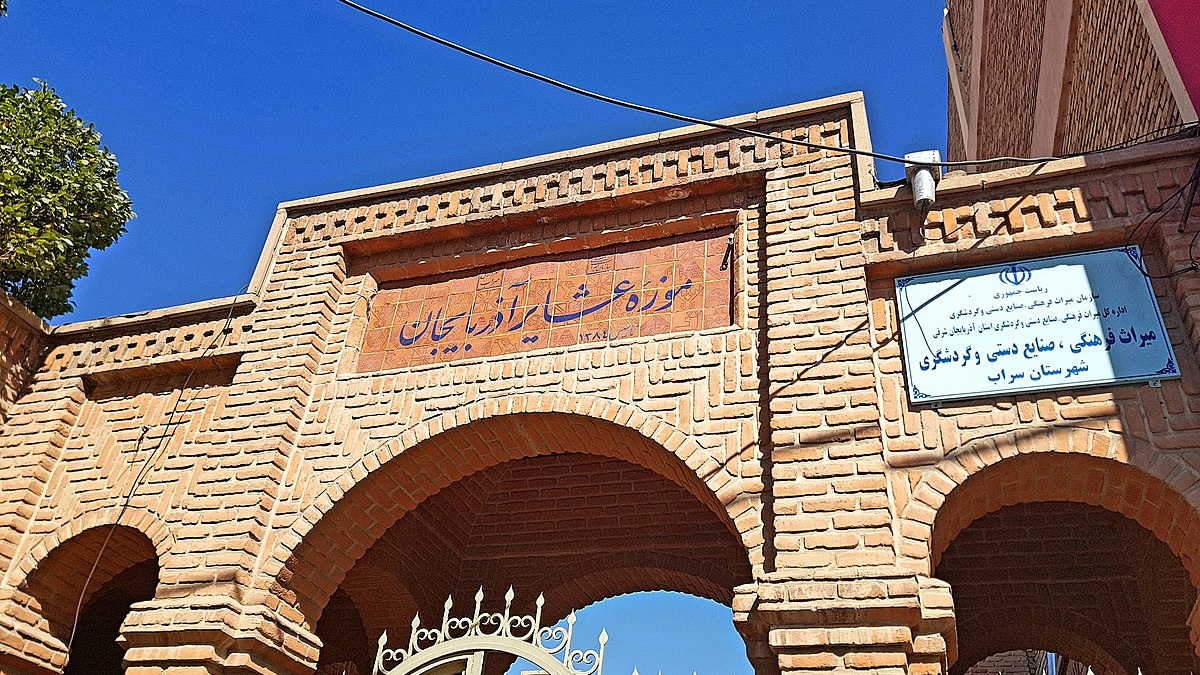
- Azarbaijan Museum of Nomads, Getting to Know One of the Most Influential Parts of Iranian Society
- Anthropology Museum of South of Sahand
- Cartoon Museum of Tabriz
- Private Collection of H. Aqaei
- Tabriz Museum of Qur’an and Manuscripts
- Safavi Museum of Bonab
- Khoda Afarin Archaeological Museums
- Petroglyphs Museum of Maragheh; A Collection of Historical Tombstones
- Muharram Museum of Tabriz; A place to Learn about the Traditions of the People of Azarbaijan
- The Iron Age Museum of Tabriz; A Journey through Human History
- Municipality Palace of Tabriz
- Tabriz Museum of Natural History; A Place to Get to Know the Nature of Northeast Iran
- Shahriar’s House Museum
- The Sanjesh Museum of Tabriz; A Place to See Interesting Human Instruments
- The Ilkhanate Museum of Maragheh; Manifesting the period when Maragheh was at its peak
- Azarbaijan Museum; A Journey from Prehistory to The Contemporary World
- Ahar Museum of Literature and Mysticism; A Manifestations of Iranian Culture
- Constitution House of Tabriz
- The Story of the Ali Masyou House and Its Transformation into a Museum
- The Qajar Museum of Tabriz; Visiting Historical Objects in a Unique Historical House